
News

Challenges loom for P.E.I.’s wild oyster fishers as fall season gets underway

This article was written by Marilee Devries and originally published by CBC News on September 2, 2025 at 2:56PM ADT. We are sharing the full text here for reference. All rights remain with the original publisher.
The industry has been grappling with 2 diseases that can be deadly for oysters
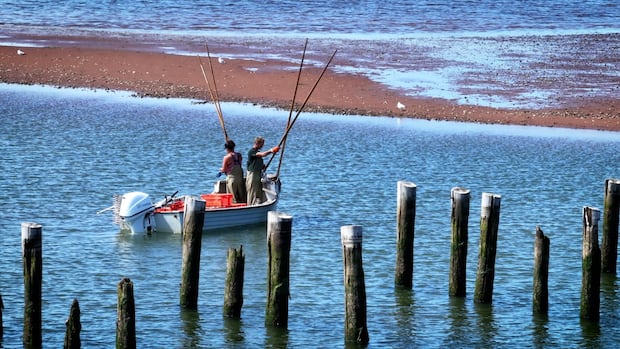
The fall season is underway for P.E.I.’s wild oyster fishers. But it’s going to be challenging, since the Island is facing two diseases that can be deadly for oysters. MSX and dermo aren’t harmful to humans but their presence in some waters means it’s tougher for Island fishers to find a place to look for them. CBC’s Nancy Russell has more.
The fall season for P.E.I.’s wild oyster fishers has begun, and the industry is bracing for challenges as it faces two different diseases that can be deadly for oysters.
Neither disease poses any risk to humans eating oysters, but both cause increased mortality rates among the molluscs.
Dermo was confirmed in oysters from Egmont Bay in July, one year after MSX, short for multinucleate sphere, was first detected in Island waters.
“We’ve lost one pile of ground, which is putting a lot of pressure on other rivers, overfishing, and you know it’s pretty stressful,” Bob MacLeod, president of the P.E.I. Shellfish Association, told CBC News from Mill River on Tuesday morning.
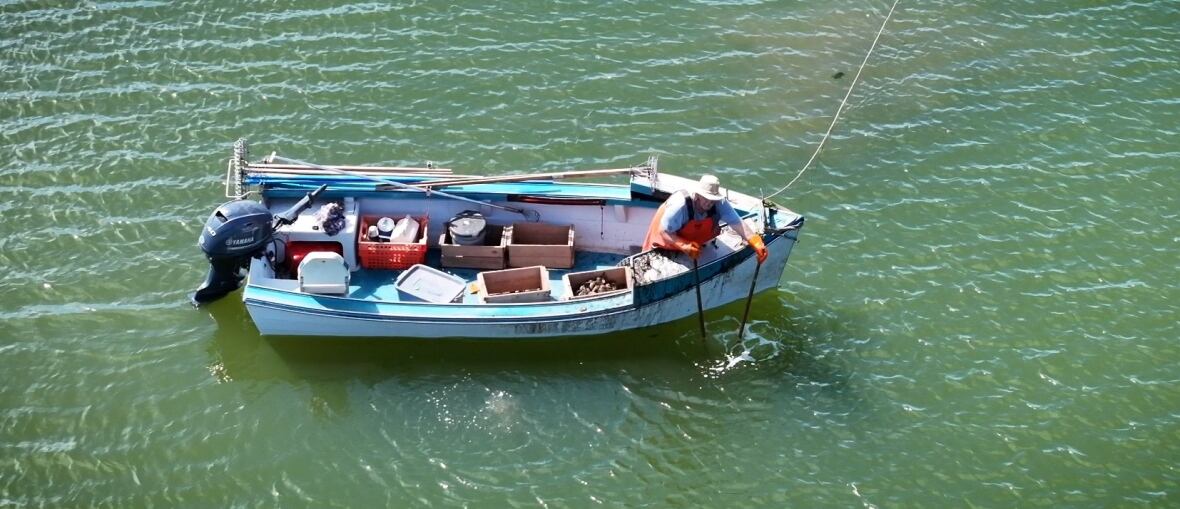
The fall season for wild oyster fishing on Prince Edward Island will go on for an extra two weeks, after the spring season was shortened by two weeks. Here, a drone camera captures the image of a fisherman using tongs to grasp oysters on the sea bottom. (Aaron Adetuyi/CBC)
Peter Warris, executive director with the PEI Aquaculture Alliance, said mortality rates vary by area, but are around 50 per cent up to 90 per cent in some places.
“A lot of [oyster farmers] are suffering due to the mortality of their product and also lack of sales across the summer,” Warris said. “That’s had a big impact on them.”
He said the lack of sales relates to concerns about disease transfer.
Overfishing concerns
Another concern is the impact of overfishing. Many wild oyster fishers have been forced out of their usual locations due to MSX and dermo, resulting in extra pressure on other rivers and bays where the issues have not been found.
For example, MacLeod said there is one river that usually has about half a dozen dories fishing it during the season, but there were “upwards of 60 dories” there for a while this year.
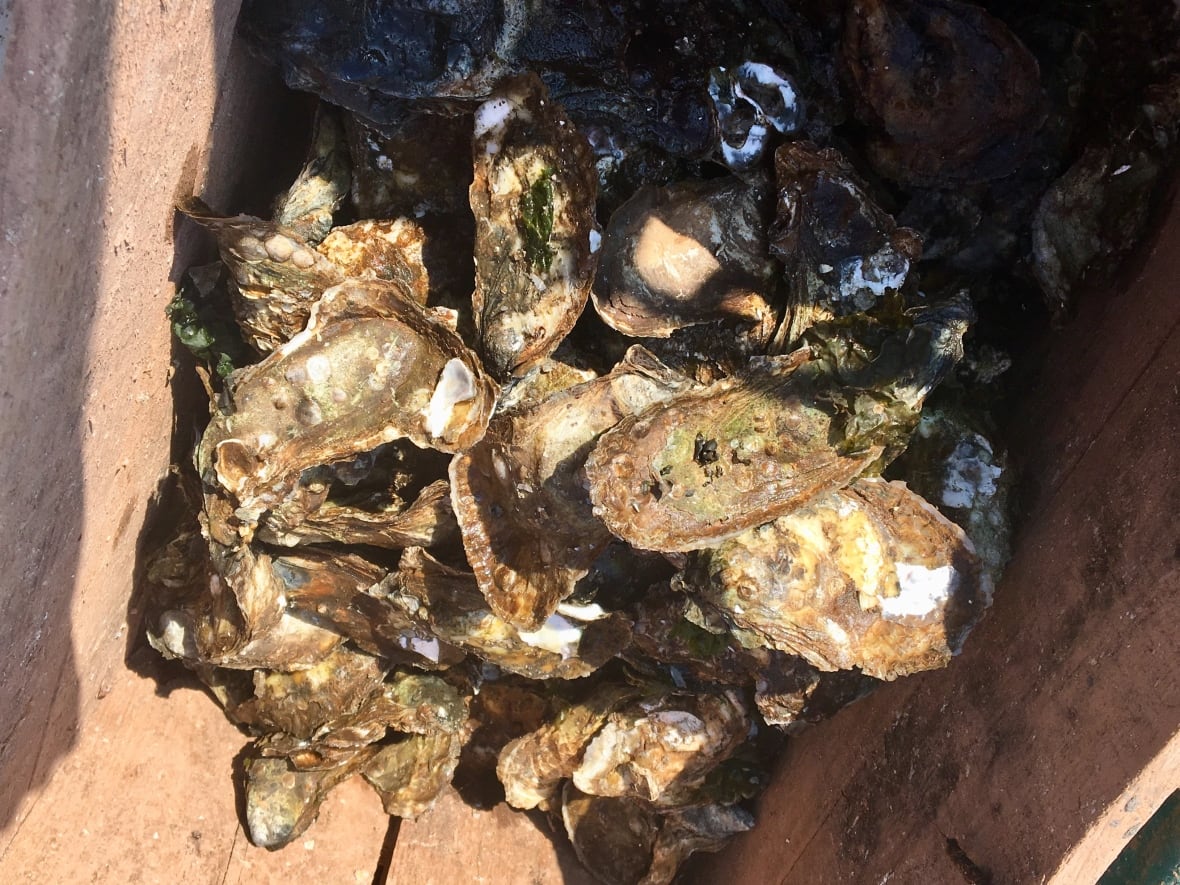
The oyster diseases dermo and MSX have both been confirmed in oyster samples from P.E.I. Neither disease poses any risk to humans eating oysters, but both cause increased mortality rates among the molluscs. (Tom Steepe/CBC)
“It worked okay this year, you know, they pulled the spring season off,” he said. “But the problem is when it’s overfished. Next year is when we’ll pay the price.
“It’s hard for [the river] to rebound in one year. So next spring is really going to… take the toll on us.”
He said he would like to see a new hatchery started to produce resistant oyster seed.
“We’ve been dealing with this since last July. What’s that, 13 to 14 months later?… We should have had a new hatchery started; we haven’t,” MacLeod said.
“And you know, you don’t build a hatchery overnight. It takes time.”
Broodstock projects could be a way out
Warris agreed, saying it can take anywhere between three and 10 years to develop oyster seed that’s tolerant of diseases like MSX and dermo.
“You have to do several generations, and for oysters, there’s two to three years before they even become mature enough to spawn,” he said. “And then you have to raise that seed and then you have to test it against the diseases.”
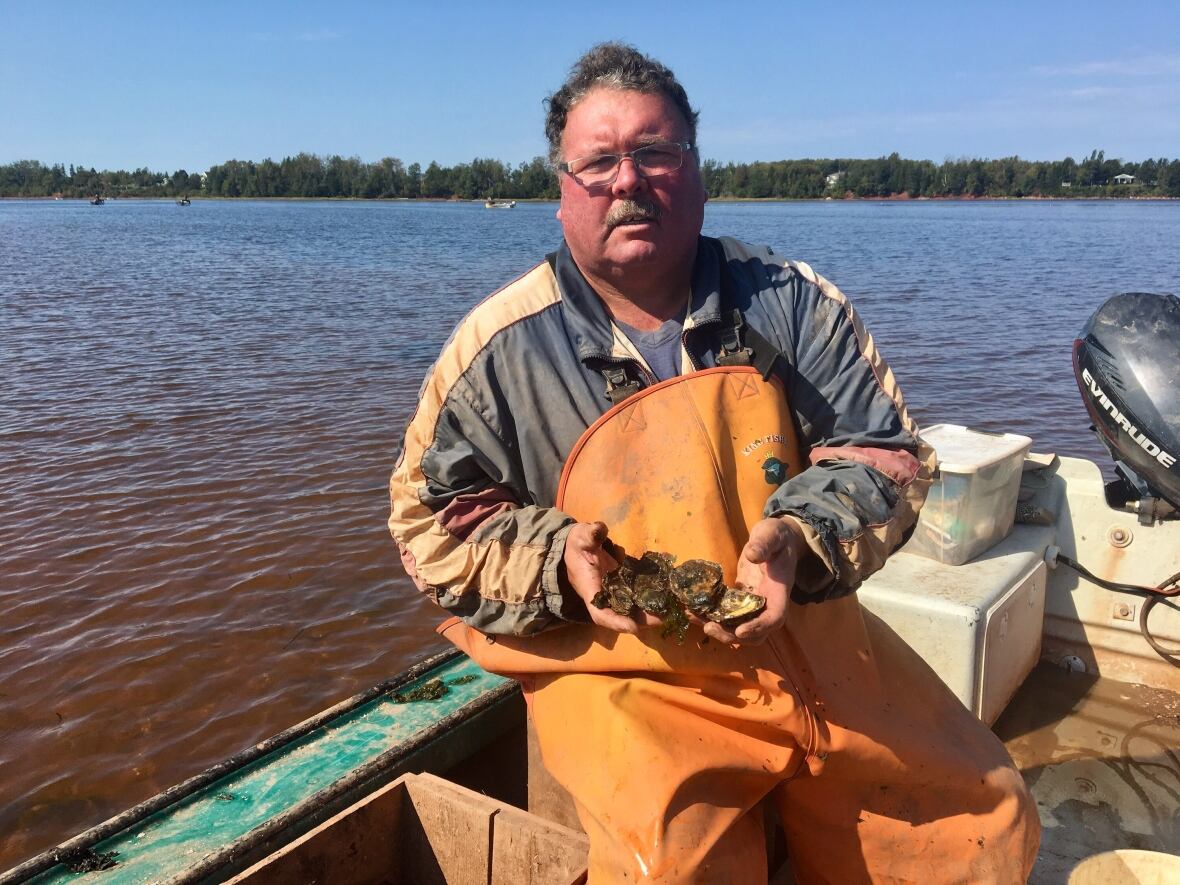
Bob MacLeod, president of the P.E.I. Shellfish Association, said the first day of the fall season was not as good for him as previous years. ‘I was down probably five boxes yesterday from last year the first day,’ he said Tuesday, meaning about $350 in lost revenue. (Tom Steepe/CBC)
He said there are several broodstock development projects underway, and believes this is the way forward.
“These diseases are present in the U.S. and you know, the industry down there functions very well,” he said. “They have strong sales, they have some wonderful product and you know, there’s nothing stopping the industry here from doing the same thing. But we need the broodstock programs to develop the tolerant seed.”
Looking ahead
Warris said fall is traditionally a big purchasing time for the oyster industry, when processors will make large buys to hold stock over the winter. This year, there is increased risk involved with doing that.
“If you’ve purchased a lot of stock to keep over the wintertime and 50 per cent of it dies, that’s obviously a huge financial loss,” he said, adding that he would like to see some guarantees of support for processors in light of that potential mortality.
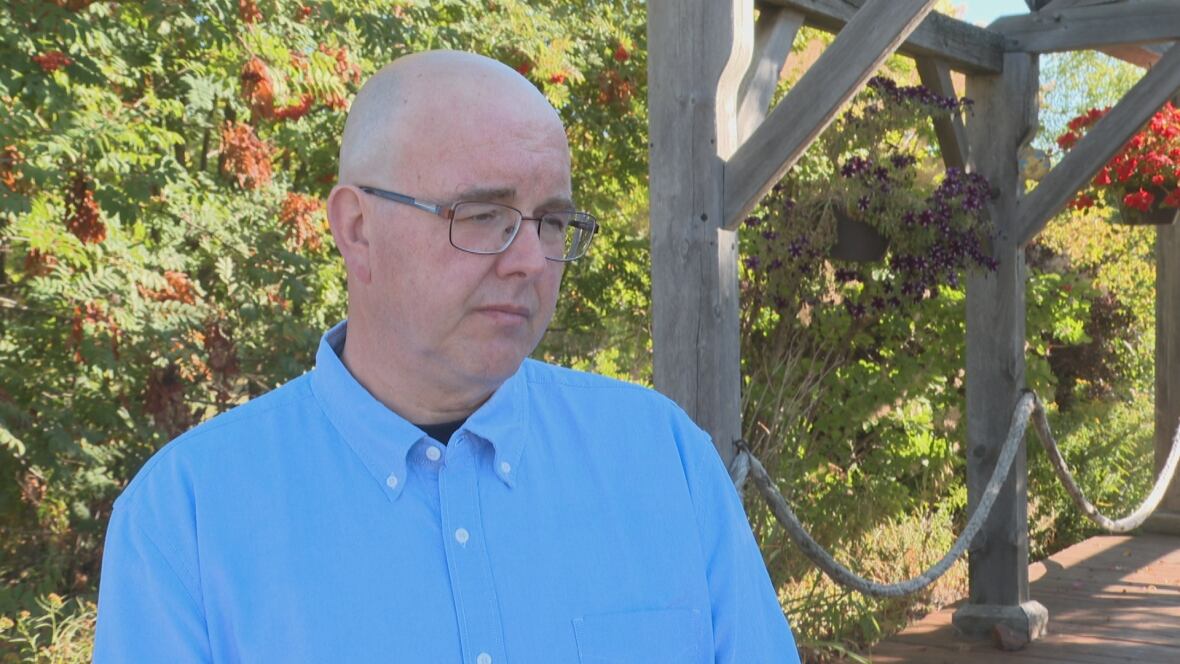
‘We’ve been lobbying the provincial and federal governments for support for the industry, both supports for members that have had high mortalities for their product and also financial support for anyone that’s been impacted by lack of sales,’ said Peter Warris, executive director of the P.E.I. Aquaculture Alliance. (Jane Robertson/CBC)
He thinks government partners could offer “some reassurance for them that lines of credit could be forgiven or you know, zero interest for a while, something like that, to allow them financially to weather this, and continue to buy the product that they want to buy.”
Warris said the alliance has been lobbying the provincial and federal governments for support for the industry, but nothing has been confirmed yet.
MacLeod said there is urgency.
“We need something to be done and done pretty quick, a course of action, because there’s no hatcheries being built and we’ve got no safety net in place for the fishermen if something happens,” he said.
“All we get from either government is ‘We’ll be there for you.’ But we don’t know what that is, because nothing was ever confirmed, what they’re gonna be there with.”
Source: CBC News. Original article available here.
Recent News
This article was originally published by RPC on February 19, 2026. We are sharing the full text here for reference.…
This article was originally published by CBC News on Jan 29, 2026. We are sharing the full text here for…
This article was written by Thinh Nguyen and originally published by CBC News on Dec 23, 2025 1:48 PM AST.…
This article was written by Nancy Russell and originally published by CBC News on Nov 20, 2025 6:00 AM AST.…
This article was written by Haeley DiRisio and originally published by CTV News on November 19, 2025 at 10:31AM EST.…
This article was written by Yutaro Sasaki and originally published by The Guardian on Nov 19, 2025. We are sharing the…
This article was written by Brittany Spencer and originally published by CBC News on Nov 19, 2025 6:00 AM AST.…
This article was written by Ryan McKellop and originally published by CBC News on Nov 12, 2025 6:00 AM AST.…
This article was written by Elizabeth McMillan and originally published by CBC News on October 19, 2025. We are sharing…
This article was written by Thinh Nguyen and originally published by CBC News on Oct 17, 2025 6:00 PM ADT.…