
News

Federal help coming for P.E.I. oyster fishery, with buyback program in the works, MP says

This article was written by Thinh Nguyen and originally published by CBC News on Dec 23, 2025 1:48 PM AST. We are sharing the full text here for reference. All rights remain with the original publisher.

An Island MP says federal help for the province’s struggling oyster fishery is coming early in the new year. But Bobby Morrissey says changes are needed in the industry before the federal help will roll out. CBC’s Wayne Thibodeau reports.
Egmont MP Bobby Morrissey says federal help for Prince Edward Island’s struggling oyster fishery is expected early in the new year.
The industry has been hit hard by MSX, a parasite first discovered on the Island in July 2024. Another disease, dermo, was also detected in the province’s waters this summer.
Neither disease poses a risk to humans, but both can be fatal for oyster populations.
While more support from Ottawa is on the way, Morrissey said changes will be required before that help rolls out.
“Simply saying we don’t want to change anything but we want government to support us. That’s status quo. That’s not going to work,” Morrissey told CBC News.
“If you look at any area that has dealt with this… naturally occurring parasite, those industries are now thriving. Oysters are thriving in areas that were literally wiped out from dermo and MSX. So there’s no reason why P.E.I. should not be able to follow the same road.”
Buyback program being considered
Part of the federal government’s plan includes restructuring the fishery, potentially by launching a buyback program to get some people out of the industry.
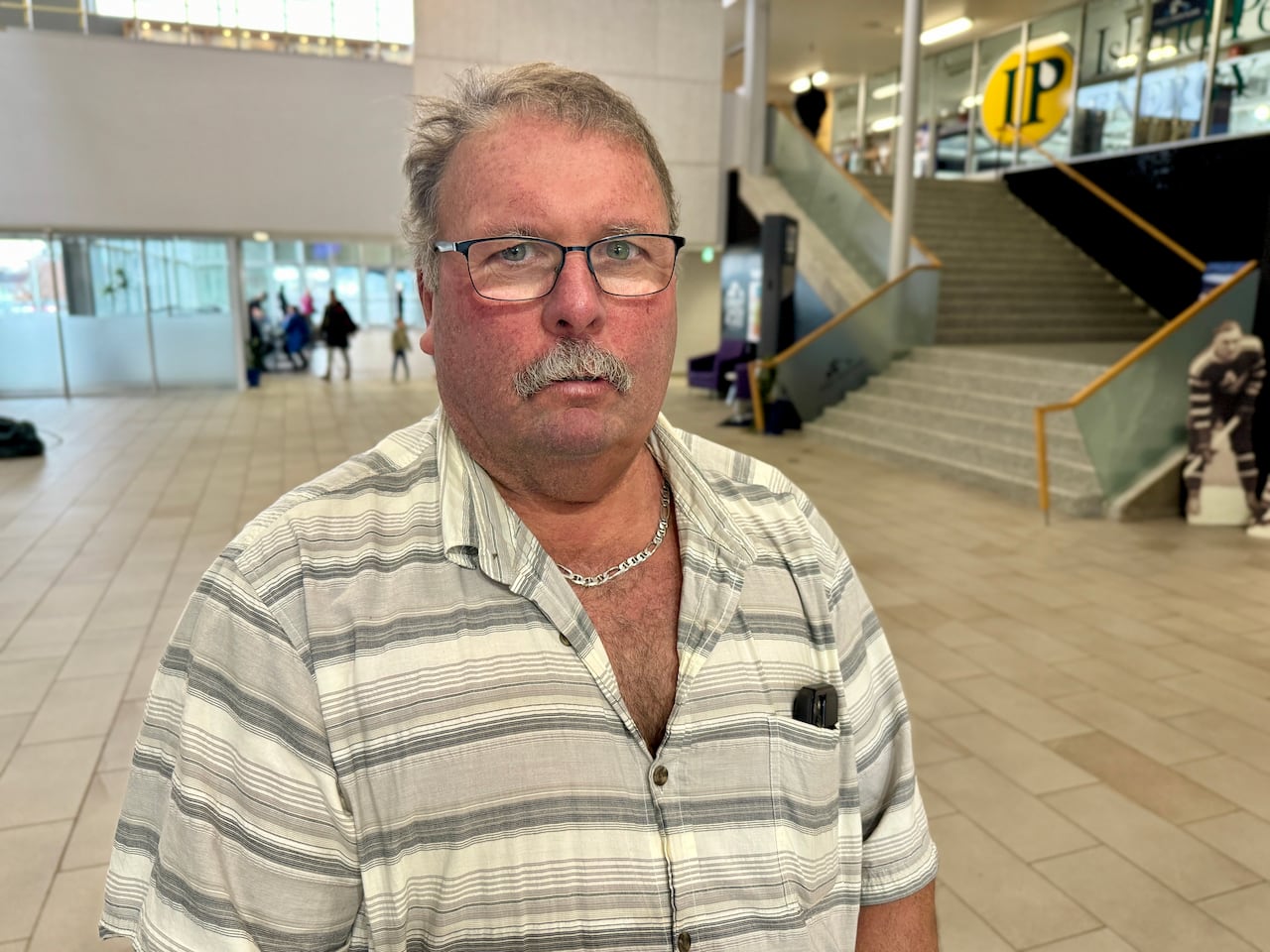
Bob MacLeod, president of the P.E.I. Shellfish Association, says he’s disappointed with the province’s recent announcement, as it did not include any support for wild oyster fishers. (Jane Robertson/CBC)
Bob MacLeod, president of the P.E.I. Shellfish Association, said some fishers would be interested in that.
“Some of the older fishermen are reaching out that they would like to get out,” MacLeod said. “We’re hoping that’s part of the restructure.”
But MacLeod said some in the industry are also calling for additional supports, like financial assistance to run programs that would employ fishermen to clean up beds where oysters have died off — something that could help to restore and maintain habitat for future stocks.
Provincial funding leaves wild fishers out, association says
Last week, the P.E.I. government announced about $9.2 million in new funding to provide what it calls “short-term relief” for oyster growers and processors facing losses linked to oyster disease. That brings the province’s total support for the sector to more than $12 million.
One initiative is designed to help growers who have experienced significant income losses due to disease. Grants will be based on a grower’s revenue decline in the current tax year compared to their average earnings over the previous five years.
Another program aims to reduce financial risk for processors if oysters cannot be sold due to diseases, while encouraging them to continue buying from fishers and growers and keeping the supply chain moving.
MacLeod said the latest funding package does not include support for wild oyster harvesters.
“The government really kind of drove a knife in between on this announcement, with absolutely nothing for us, which was a shame a week before Christmas,” he said.
But Fisheries Minister Zack Bell said supports for the wild fishery were announced last month, and included retraining subsidies for P.E.I. oyster fishers.

P.E.I. Fisheries Minister Zack Bell says the province’s recent announcement does not include support for wild oyster fishers because that money had been announced earlier. (Jane Robertson/CBC)
“From what I’ve been told, for the most part, is many of the fishers did get their oysters this year,” Bell said.
“I do feel bad for them, they had to work a lot harder and they had to travel a little further across P.E.I. and there was that fear of overfishing.”
MacLeod said he would like to see the retraining programs aimed at keeping people in the industry by preparing them for new roles, such as working in hatcheries and nurseries.
“There’s lots of different things within the industry that we don’t do that we could be retrained to do to keep our industry alive,” MacLeod said.
Debate over importing disease-resistant seed
The industry remains divided over whether to import MSX- and dermo-resistant oyster seed from the U.S.
Island oyster growers are overwhelmingly in favour of importing seed, while wild oyster fishers strongly oppose the idea.
“We had a members meeting about two weeks ago, we had close to 100 fishermen at that meeting, and it was made very loud and clear in a very unanimous vote that the wild fishermen do not want to see the American seed come in,” MacLeod said.
The wild fishers are concerned imported seed could carry other diseases not currently present on P.E.I., MacLeod said.

The oyster industry on P.E.I. has been hit hard by MSX, a parasite first discovered on the Island in July 2024. Another disease, dermo, was also detected here this summer. (Aaron Adetuyi/CBC)
He also said it’s unclear whether the U.S. seed is resistant to Malpeque disease — a highly infectious oyster disease first identified in Malpeque Bay in 1915 that devastated oyster stocks across the Island. Oysters that survived later developed resistance.
Both Morrissey and Bell say that when it comes to importing seed from the U.S., federal and provincial officials will take their direction from the Canadian Food Inspection Agency.
“You have to deal with science, you have to deal with facts, and we’ll be prudent in dealing with any request that comes in to the government of Canada to approve the importation of oyster seed,” Morrissey said.
Source: CBC News. Original article available here.
Recent News
This article was written by Stephen Brun and originally published by CBC News on July 20, 2024 at 11:24AM ADT.…
This article was written by Isabelle Gallant and originally published by CBC News on July 19, 2024 at 8:16PM ADT.…
This article was written by Shane Ross and Wayne Thibodeau and originally published by CBC News on July 16, 2024…
This article was written by Shane Ross and originally published by CBC News on July 15, 2024 at 7:55 PM…
This article was written by Shane Ross and originally published by CBC News on July 14, 2024 at 5:47PM ADT.…
This article was written by Shane Ross and originally published by CBC News on July 13, 2024 at 1:34 PM…
- « Previous
- 1
- …
- 5
- 6
- 7