
News

P.E.I. oyster grower consider quitting as diseases devastate farms

This article was written by Maria Sarrouh and originally published on May 25th 2026 at 5:00am EDT.
ALBERTON, P.E.I. – Oysters rattle up a conveyor belt on Bruce and Kaila Richard’s farm, as the couple sorts for survivors.
Their boat is anchored over the red sands of the Dock River in western P.E.I., an area hard hit by the parasitic diseases MSX and Dermo. Pulling pan after pan from the water, the Richards realize most of their product won’t make it to market for the second year in a row. Fewer than 10 per cent of their oysters are alive so far this season, putting them among many small growers considering whether they should continue, or quit the trade.
“We can’t afford to keep going like this,” Bruce Richard said. “We don’t have the cash flow.”
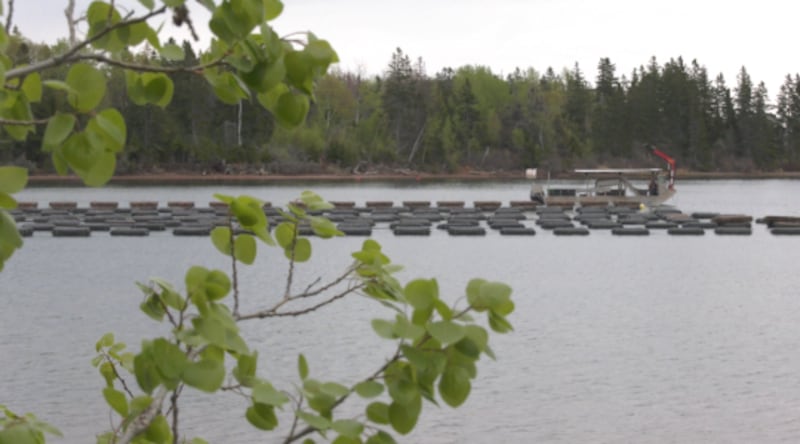
The Richards’ oyster lease sits in the Dock River in western P.E.I., an area hard hit by MSX and Dermo. (CTV News).
The diseases aren’t harmful to humans but are highly deadly for oysters. For some farmers, industry leaders and businesses tied to the sector, the fear is the damage could reshape Canada’s second-largest oyster-producing province.
For the Richards, the losses first started showing last fall, with 40 to 60 per cent dead oysters. Much of what remained showed stunted growth.
That matters in an industry built around multi-year growing cycles.
Oysters can take three years to reach the right size to sell. Sometimes they can take up to four or five years, Richard says, depending on where they are on the Island.
That means hundreds of thousands of dollars already invested in the business, from seed to gear to lease costs. Even if Richard sells what’s left this season, he won’t break even – a reality that’s “hard to stomach.”
“People are lost. They don’t know what to do right now. We’ve never seen this before.”
Some growers have seen 100 per cent mortality, said Peter Warris, executive director of the P.E.I. Aquaculture Alliance.
“Some of them are considering taking a break, and stepping away and doing something else,” Warris said.
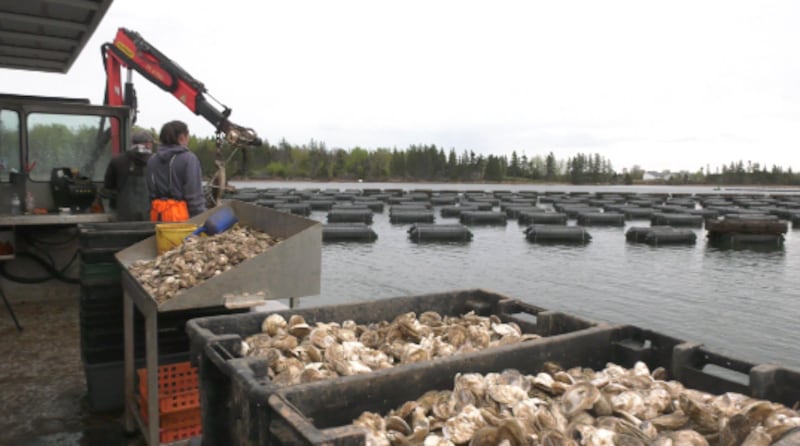
Dead oysters fill bins aboard the Richards’ work boat. (CTV News).
Last year, the Richards remortgaged their house to buy out a business partner. With two young daughters to take care of, and their home on the line, the couple sees no financially viable way out.
“You talk to everybody out here. Spirits are low. It’s hard,” Richard says. “It just feels like every small farmer right now is going to be pushed to the point of where we have to leave.”
Earlier this month, both the federal and provincial governments announced new supports for the sector.
Ottawa has budgeted more than $4.2 million to help P.E.I. growers buy disease-resistant oyster seed to rebuild, along with $6 million for a one-time license buy-back for wild harvesters, among other measures.
The Canadian Food Inspection Agency also approved the import of breeding stock from the U.S., with approval for their use in Atlantic Canada expected in the coming weeks.
The P.E.I. government says it has committed more than $12 million in response to the diseases. The most recent package includes $1.46 million for a new wage assistance program to offset a portion of payroll costs linked to increased sorting and handling work.
Another $3 million is going to an interest relief program tied to existing term debt for those who have experienced income losses of at least 30 per cent. However, applications open in early 2027 – which Richard says doesn’t meet the urgency of the situation.
“You’re telling me I have to wait another year?” he said. “How am I supposed to make any of these payments?”
Warris said the announcements are good news, but the industry still needs help that can keep growers going, while recovery takes form, including basic income support and access to employment insurance where eligible. If too many operators leave, Warris said P.E.I. risks losing part of the oyster production capacity it spent years building.
“Should enough people decide to step back from the industry, then we’re definitely going to lose some of that, which would be a real shame,” Warris said.
The ripple effects are already reaching businesses that rely on Island seafood.

Bryan Carr, owner of Carr’s Oyster Bar in Stanley Bridge, P.E.I., says restaurants are adjusting to less predictable local oyster supply. (CTV News).
At Carr’s Oyster Bar in Stanley Bridge, staff are getting ready to reopen for the 2026 season while wondering how many P.E.I. oysters they can put on the menu.
“If a business can only supply me so much, I’m grateful for that. If they can’t, I have to find other sources to provide for our guests here,” said Bryan Carr, the restaurant’s owner, executive chef and culinary success manager.
“It’s an emotional time.”
From the patio, he can see oyster boats coming into Stanley Bridge Marina. The people steering them are neighbours, friends and, in his words, “resilient.”
The warmer months will come with a learning curve, Carr says, but there’s still healthy product available.
“There’s just going to be unknowns for quite a while here,” he said.
Back on the water, the work is more than a paycheque for the Richards.
It’s a lifestyle they hoped to pass on to their daughters, and a way of honouring the legacy of Kaila’s father, who was also an oyster farmer.
But Richard says the stakes stretch beyond families like his, reaching the rural garages, bakeries, convenience stores, and gas stations where growers buy fuel, food and equipment.
“There’s a lot of long-term effects that’s going to hit here, and people aren’t going to see it until the industry is gone,” he said. “My plan is to keep coming out here until I can’t anymore.”
Source: CTV News. Original article found here.
Recent News
This article was originally published by Onda. We are sharing the full text here for reference. All rights remain with…
This article was written by Seyitan Moritiwon and originally published by Hatchery International on March 30, 2025. We are sharing…
This article was written by Taylor O’Brien and originally published by CBC News on March 19, 2025 at 6:00AM ADT.…
News release March 7, 2025 Ottawa, Ontario – Recent detections of MSX disease, or multinucleate sphere unknown X (MSX), in Prince…
This article was written by Thinh Nguyen and originally published by CBC News on January 16, 2025 at 3:05PM ADT.…
This article was written by Sara Fraser and originally published by CBC News on January 10, 2025 at 5:34PM ADT.…
This article was written by Thinh Nguyen and Gwyneth Egan and originally published by CBC News on January 9, 2025…
This article was written by Meig Campbell and originally published by CBC News on November 28, 2024 at 4:26PM AST.…
This article was written by the Global News Staff and originally published by Global News on November 28, 2024 at…
This article was written by Stacey Janzer and originally published by CBC News on November 27, 2024 at 6:00AM AST.…